Discover why Sandy Creek Bridge was engineered differently, with a unique grout-filled FRP design built to withstand challenging flood conditions.
Not every Fibre Reinforced Polymer (FRP) bridge is designed to be lightweight. For the Sandy Creek Bridge upgrade along Queensland’s Brisbane Valley Rail Trail, additional structural mass was a deliberate engineering decision to meet demanding flood and hydraulic loading requirements.
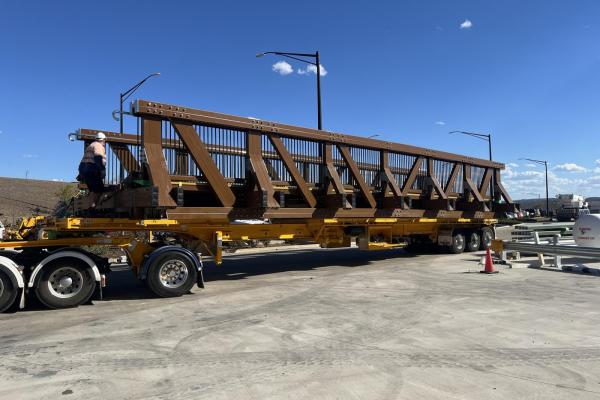
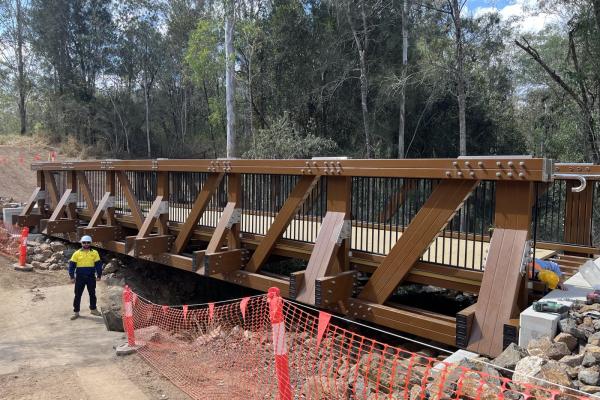
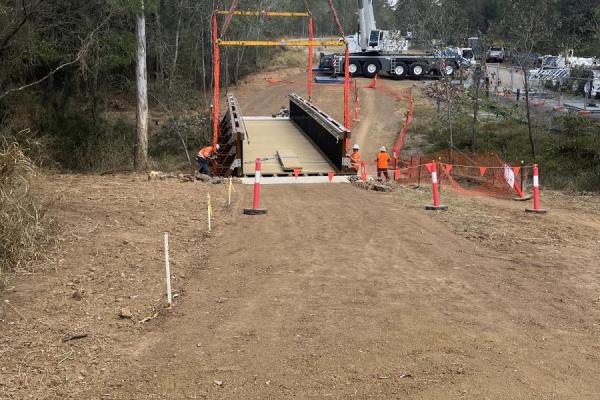
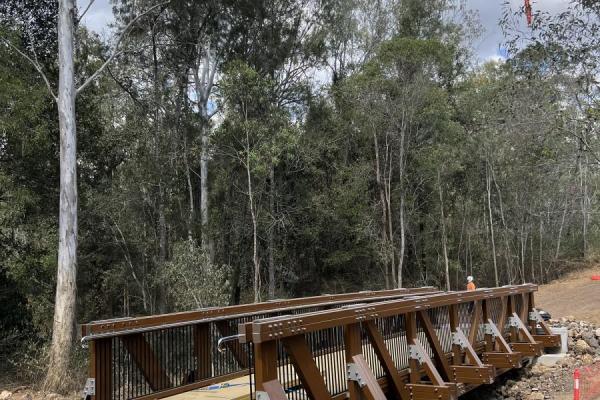
Designed by Wagners Composite Fibre Technologies (CFT) in collaboration with OZR Consulting, the new 16-metre-long, 3-metre-wide single-span truss bridge demonstrates how FRP infrastructure can be tailored to suit challenging site conditions.
One of the key advantages of FRP infrastructure is its lightweight construction, which can simplify transportation, handling and installation, particularly in remote or difficult-to-access locations.
However, the Sandy Creek Bridge required a different approach.
While a typical FRP pedestrian bridge of similar dimensions may weigh approximately 6–9 tonnes, the Sandy Creek structure has been deliberately engineered to weigh approximately 31 tonnes once grout-filled.
Rather than prioritising minimum weight, the design incorporates a grout-filled FRP truss system to provide additional structural mass and stiffness, supporting the bridge’s performance under demanding hydraulic loading conditions.
Located along the Brisbane Valley Rail Trail, Sandy Creek is subject to challenging hydraulic conditions, requiring a bridge capable of withstanding significant flood velocities and debris loading.
The structure has been designed for Q100 flood velocity conditions, with the grout-filled truss system contributing to its ability to resist the forces associated with severe flood events.
The additional mass forms part of the bridge’s overall structural design, helping address the hydraulic demands of the site while retaining the durability benefits of FRP materials.
This project demonstrates that FRP infrastructure is not limited to lightweight applications. Its structural configuration can be adapted to meet specific engineering requirements, including those where additional mass is beneficial.
Delivered for Transport and Main Roads Queensland (RoadTek), the Sandy Creek Bridge was designed by Wagners CFT in collaboration with OZR Consulting.
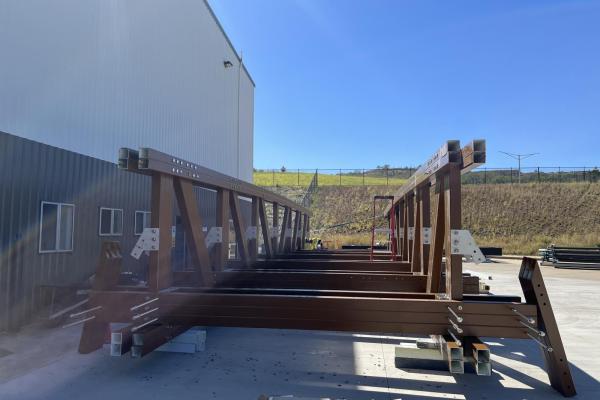
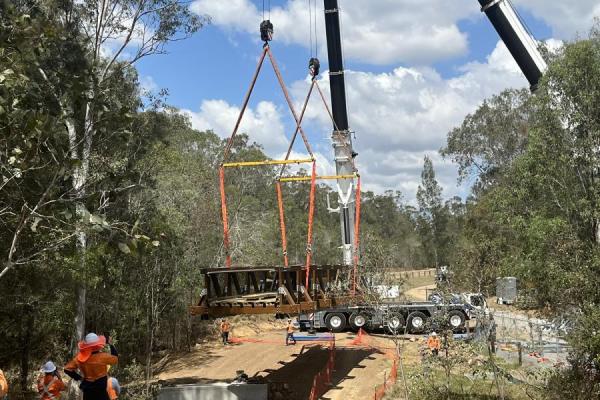
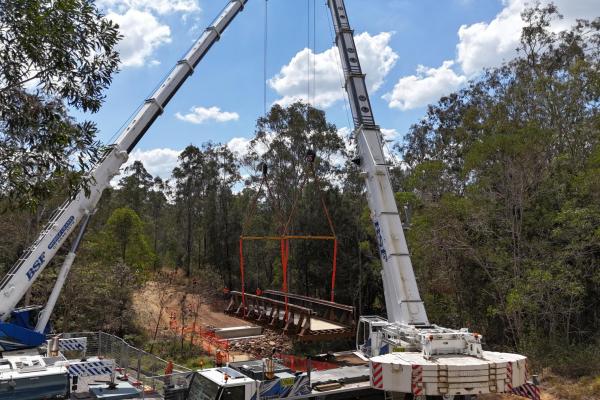
The 16-metre single-span truss structure has been assembled by the Wagners CFT construction team at its manufacturing facility in Wellcamp, Queensland.
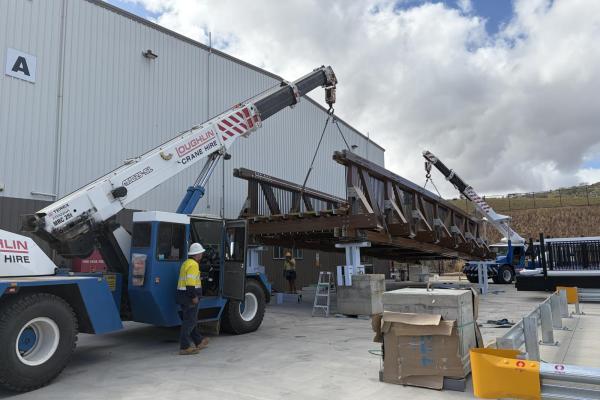
As part of the manufacturing and assembly process, two cranes were used to position the bridge on an incline, allowing the construction team to fill the FRP truss members with grout.
This specialised process forms a key part of achieving the bridge’s required structural mass and performance characteristics before delivery to site.
The Sandy Creek Bridge highlights the flexibility of FRP structural systems and the importance of designing infrastructure around the specific demands of each project.
While lightweight construction remains a significant advantage for many FRP pedestrian bridges, Sandy Creek demonstrates how additional mass can be incorporated where required to address extreme hydraulic conditions.
By combining a purpose-designed grout-filled truss system with the inherent corrosion resistance and durability of FRP, the project provides a tailored infrastructure solution for a challenging regional environment.
At Wagners CFT, we design and manufacture FRP bridges to meet the structural, environmental and operational requirements of each project, whether that means minimising weight or deliberately increasing it.