
Pedestrian boardwalks and bridges are essential for connecting communities, protecting sensitive environments, and opening up previously inaccessible areas. Yet traditional construction methods often struggle to deliver these structures efficiently. Heavy materials, on-site fabrication, and unpredictable conditions can slow projects, inflate costs, and create safety risks for construction teams.
Modularised design combined with advanced materials like Fibre Reinforced Polymer (FRP) is changing the game. By moving fabrication off-site, standardising components, and focusing on plug-and-play assembly, these structures allow construction teams to work more efficiently, while delivering long-term value for asset owners.
Simplifying Construction Through Modularised Design
Traditional on-site construction of bridges and boardwalks requires complex coordination, significant manual handling, and the management of site-specific challenges like weather, uneven terrain, and heavy equipment logistics.
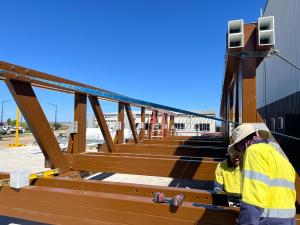
With modularised design, much of the construction is shifted to a controlled environment, where components are prefabricated to precise specifications. When delivered to site, these modules can be installed quickly, with minimal handling and minimal disruption.
The modularised approach dramatically reduces complexity: crews need only prepare supporting structures, fit modules together, and complete minor connections. Large, pre-engineered sections allow teams to work faster, safer, and more predictably, which is especially valuable in remote or environmentally sensitive areas.
Time Savings That Benefit Everyone
Time is money in construction. Every day a team spends on-site adds labour, equipment, and logistical costs. Modularised structures can cut weeks from construction schedules, because:
- Modules are prefabricated in parallel with site preparation
- On-site assembly is fast and straightforward
- Delays from weather or site conditions are minimised
Faster construction not only reduces costs but also allows communities to access the infrastructure sooner, increasing the return on investment and enhancing public satisfaction.
Safety and Efficiency
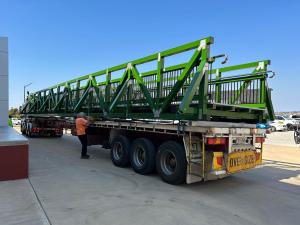
Lightweight, strong materials like FRP simplify lifting, handling, and installation. Prefabricated modules reduce the need for extensive cutting, drilling, or welding on-site, which decreases both physical strain and safety risks for construction crews.
These efficiencies reduce the likelihood of accidents and protect both workers and project schedules, creating a safer, more efficient construction process.
Predictable Quality, Predictable Costs
Variability is a major challenge in traditional construction: timber can warp, concrete can cure inconsistently, and site conditions can compromise quality. Modularised components, produced in a controlled environment, provide consistent quality, reducing rework and material waste.
For asset owners, this reliability translates into predictable project outcomes, fewer unexpected costs, and reduced maintenance requirements, all of which strengthen the long-term value of the investment.
Minimal Site Disruption
Many pedestrian infrastructure projects traverse sensitive ecosystems, from wetlands and dune systems to urban parks. Traditional on-site construction can require heavy machinery, extended site access, and disturbance to the surrounding environment.
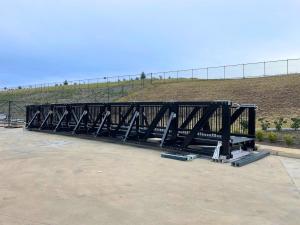
Prefabricated modularised structures minimise environmental impact, as most work is done off-site and installation requires limited equipment. Reduced site disruption also makes regulatory compliance easier and accelerates approvals, benefiting both construction teams and asset owners.
FRP Material: Low-Maintenance and Long-Lasting
Beyond construction efficiencies, FRP delivers long-term performance advantages:
- Corrosion-resistant: No rot, rust or corrosion even in high corrosion environments
- Rot-proof and weatherproof: Resists sun, rain, and saltwater exposure
- Longevity: Many FRP structures are designed for a service life of 100 years or more
These properties mean lower maintenance costs and reduced life-cycle risk for asset owners, creating a more cost-effective investment over the long term.
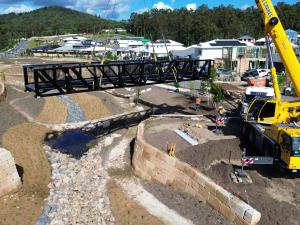
Real-World Efficiency in Action
When modularised FRP bridges or boardwalks are installed, the process typically involves:
- Prefabricating modules in a controlled workshop
- Transporting them to the site
- Installing them quickly with minimal cranes and crew
- Connecting modules with minor tie-ins
This approach consistently demonstrates three to four weeks’ time savings compared to traditional on-site builds, while also reducing labour hours, equipment needs, and the likelihood of unexpected delays.
Asset Owner Benefits
For owners, the advantages of modular FRP infrastructure extend beyond construction:
- Reduced project costs through faster installation and lower on-site labour requirements
- Lower risk exposure thanks to predictable fabrication and minimised on-site complexity
- Lower maintenance costs from durable, corrosion-resistant materials
- Faster operational access, allowing communities or customers to use the infrastructure sooner
In essence, modularised design ensures that investments in pedestrian infrastructure deliver more value, more quickly, and with less ongoing cost.
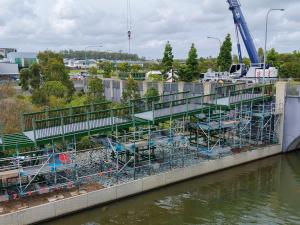
Conclusion: Why Modularised FRP Infrastructure Makes Sense
Modularised design combined with advanced FRP materials represents a smart, future-focused approach to pedestrian boardwalks and bridges. It simplifies construction, reduces risk, accelerates delivery, and minimises environmental disruption. For asset owners, it translates into lower costs, lower maintenance, and faster returns on investment.
By focusing on off-site fabrication, precision engineering, and plug-and-play assembly, these structures deliver real-world benefits for construction teams while safeguarding the long-term value of public or private infrastructure assets.
Investing in modular FRP infrastructure isn’t just about building bridges and boardwalks, it’s about building smarter, faster, and more cost-effectively, for the benefit of everyone involved.